

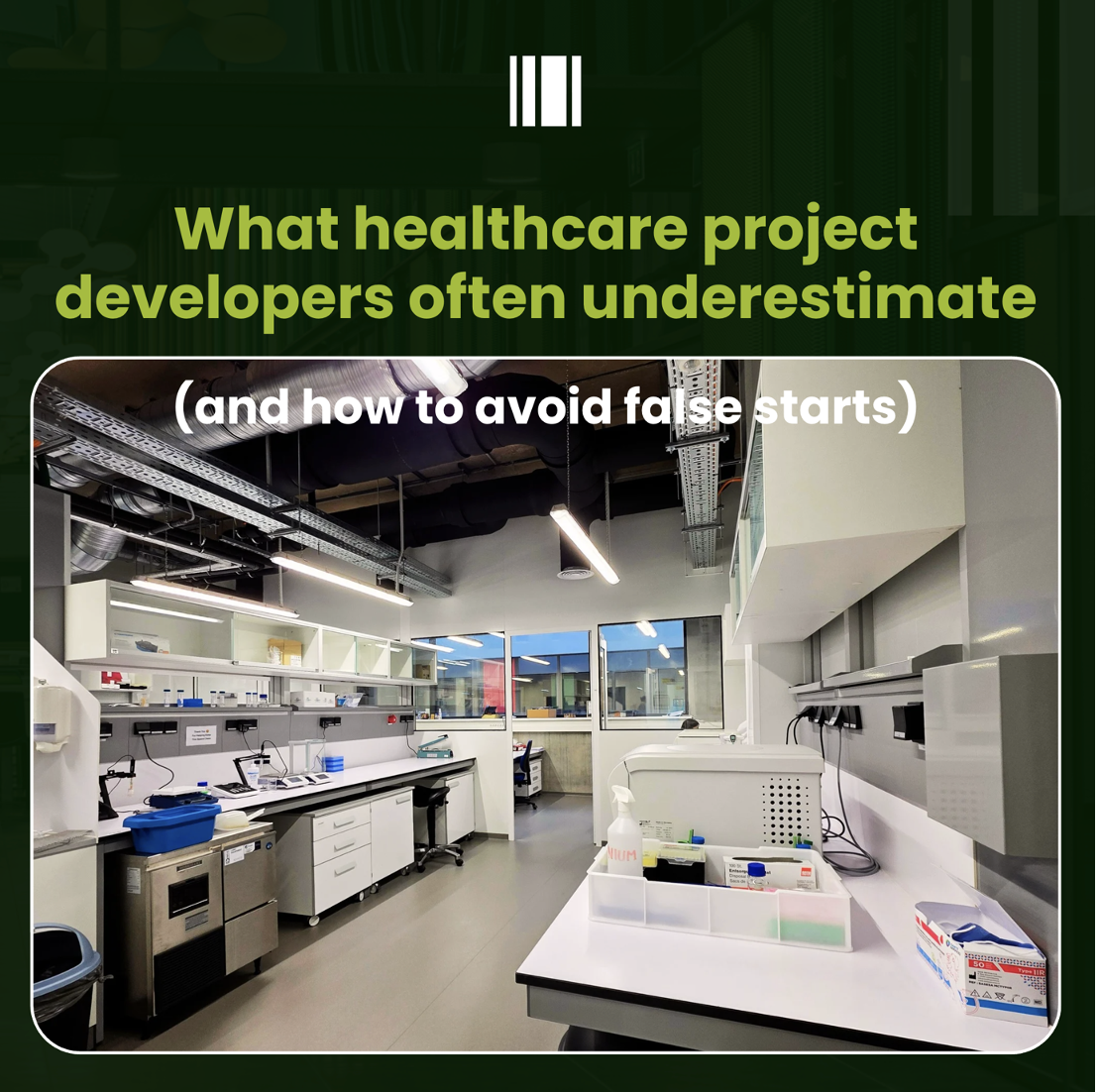
In health innovation, false starts are rarely caused by the scientific quality of a project. More often, they stem from what was not anticipated: organization, working environment, regulatory constraints, credibility with external partners… all dimensions that tend to be underestimated at the beginning, yet prove decisive for what comes next.
Many project leaders arrive with a promising technology—sometimes already scientifically validated—but without a structured framework around it. In healthcare, however, improvisation is costly: in time, energy, and sometimes credibility.
The Myth of “We’ll See Later”
The most common mistake is postponing questions that seem secondary:
Where will we actually work?
What will our technical needs be in six months?
Is our environment compliant with sector requirements?
That “later” always comes sooner than expected. And when it arrives without preparation, it can abruptly slow down a project’s momentum.
Structuring Is Not Slowing Down
Contrary to a common belief, structuring a project early on does not mean freezing it. On the contrary, it gives the project flexibility by anticipating possible developments and avoiding future bottlenecks.
This is precisely where the House of BioHealth steps in: not to make decisions on behalf of teams, but to help them lay the right foundations.
A clear framework allows project leaders to focus on what truly matters: research, validation, and innovation.
The Environment Matters as Much as the Idea
In healthcare, the working environment is never neutral. It influences the ability to collaborate, attract talent, reassure partners, and interact with institutions.
Having a credible professional setting, aligned with the sector’s requirements, is often a strong first signal to the ecosystem. A signal that says: this project is serious, structured, and ready to move forward.
Avoiding False Starts Means Accepting Support
Being supported does not mean delegating your project. It means surrounding yourself wisely, accepting an external perspective, and benefiting from collective experience.
The House of BioHealth plays this role as a support point: helping anticipate blind spots, structuring without constraining, and securing the early stages without ever taking ownership of decisions.
Because in health innovation, starting fast matters less than starting right.