

When discussing major health innovation hubs, attention naturally turns to the United States, Germany, or the Nordic countries. Yet for several years, Luxembourg has been steadily building a distinctive health ecosystem—often discreet, but remarkably structured. An ecosystem whose strength lies not in its size, but in the quality of its connections, its clarity, and its ability to support emerging projects.
A Clear Ecosystem, Rare at the European Scale
One of Luxembourg’s greatest strengths is the clarity of its environment. In a sector often fragmented—where project leaders struggle to identify the right stakeholders—the Grand Duchy offers a framework that is easier to understand and navigate.
Actors know one another, bridges exist between research, innovation, and institutions, and decision-making circuits are shorter. This proximity significantly reduces friction and facilitates exchanges, particularly for projects in their structuring phase.
For health teams, this clarity becomes a strategic advantage: it allows them to dedicate more energy to the project itself rather than to navigating a complex ecosystem.
Human-Scale Does Not Mean Lower Standards
Contrary to certain assumptions, Luxembourg’s modest size does not translate into lower expectations. Quite the opposite. Projects evolve in a demanding environment that remains attentive to the scientific, regulatory, and ethical standards specific to the healthcare sector.
This level of rigor acts as a natural filter. It encourages solid, well-structured projects capable of engaging with international partners while benefiting from a more agile environment than that of larger, saturated hubs.
A Favorable Ground for Structuring Projects
Luxembourg stands out particularly during the early and intermediate phases of health innovation. Where some ecosystems prioritize hyper-acceleration or intense competition, the Luxembourgish context allows projects to structure themselves thoughtfully without unnecessary delays.
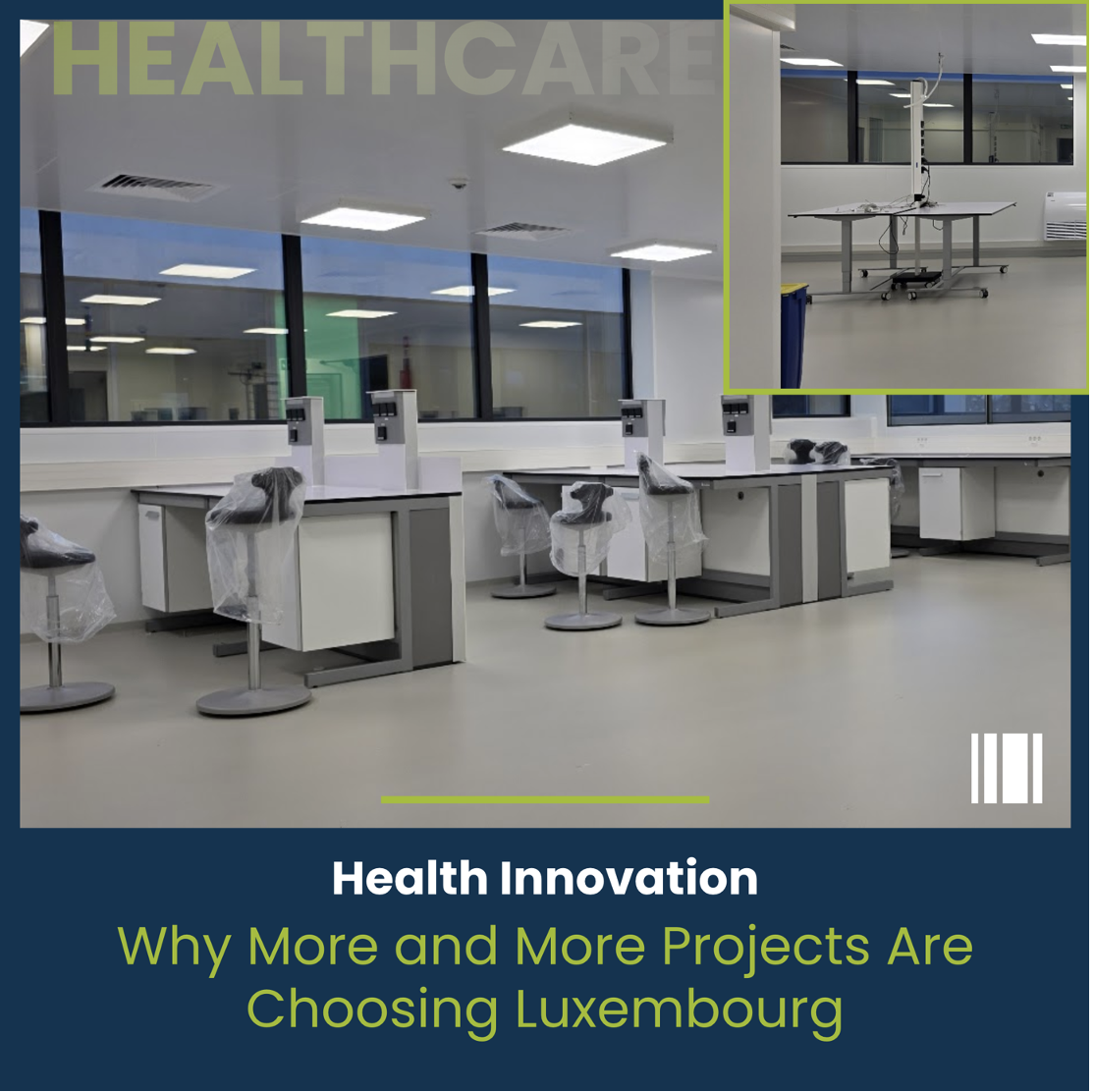
This is precisely where places such as the House of BioHealth play their role. HoBH acts as an anchor point for health projects, offering a credible professional framework, suitable infrastructure, and an environment conducive to strategic reflection.
Its positioning fits naturally within the logic of the Luxembourg ecosystem: supporting without imposing, structuring without standardizing.
Facilitating Connections Without Creating Dependency
One of the key challenges for any innovative project is integrating into an ecosystem without becoming diluted within it. Luxembourg, through its size and collaborative culture, enables this gradual and balanced integration.
The House of BioHealth acts here as a discreet facilitator. It does not promise shortcuts but instead encourages meaningful connections at the right time, depending on the project’s maturity. This approach avoids premature or superficial interactions, which are often counterproductive.
A Credible Framework for International Reach
Establishing a presence in a structured ecosystem like Luxembourg strengthens the international credibility of health projects. The institutional framework, the quality of infrastructure, and the coherence of the environment send a clear signal to foreign partners.
In this context, the House of BioHealth acts as a clear entry point into Luxembourg’s health ecosystem. It allows projects—including international ones—to quickly understand where they stand, how to evolve, and which standards guide the environment.
An Approach Aligned with the Health Challenges of Tomorrow
More than simply a host territory, Luxembourg is developing a vision of health innovation based on responsibility, cooperation, and sustainability. This approach prioritizes the long-term relevance of projects rather than immediate performance alone.
This coherence is precisely where the House of BioHealth positions itself: creating a stable, structured, and human-centered framework worthy of the ambitions carried by health projects.
Because in healthcare, the quality of the ecosystem matters just as much as the quality of the innovation itself.